
Plate and frame heat exchangers have grown in popularity over the last couple of decades relative to shell and tube heat exchangers. Generally, plate and frame heat exchangers are more efficient and take up less space than shell and tube heat exchangers. These factors have helped to drive interest in plate and frame heat exchangers as an alternative to shell and tube exchangers. There are two methods for cleaning plate and frame heat exchangers: cleaning in place, which is done by circulating chemicals through the channels of the plate and frame heat exchanger, or disassembling the plates from the frame and cleaning the plates individually either with pressurized water, chemicals, or a mechanical method.
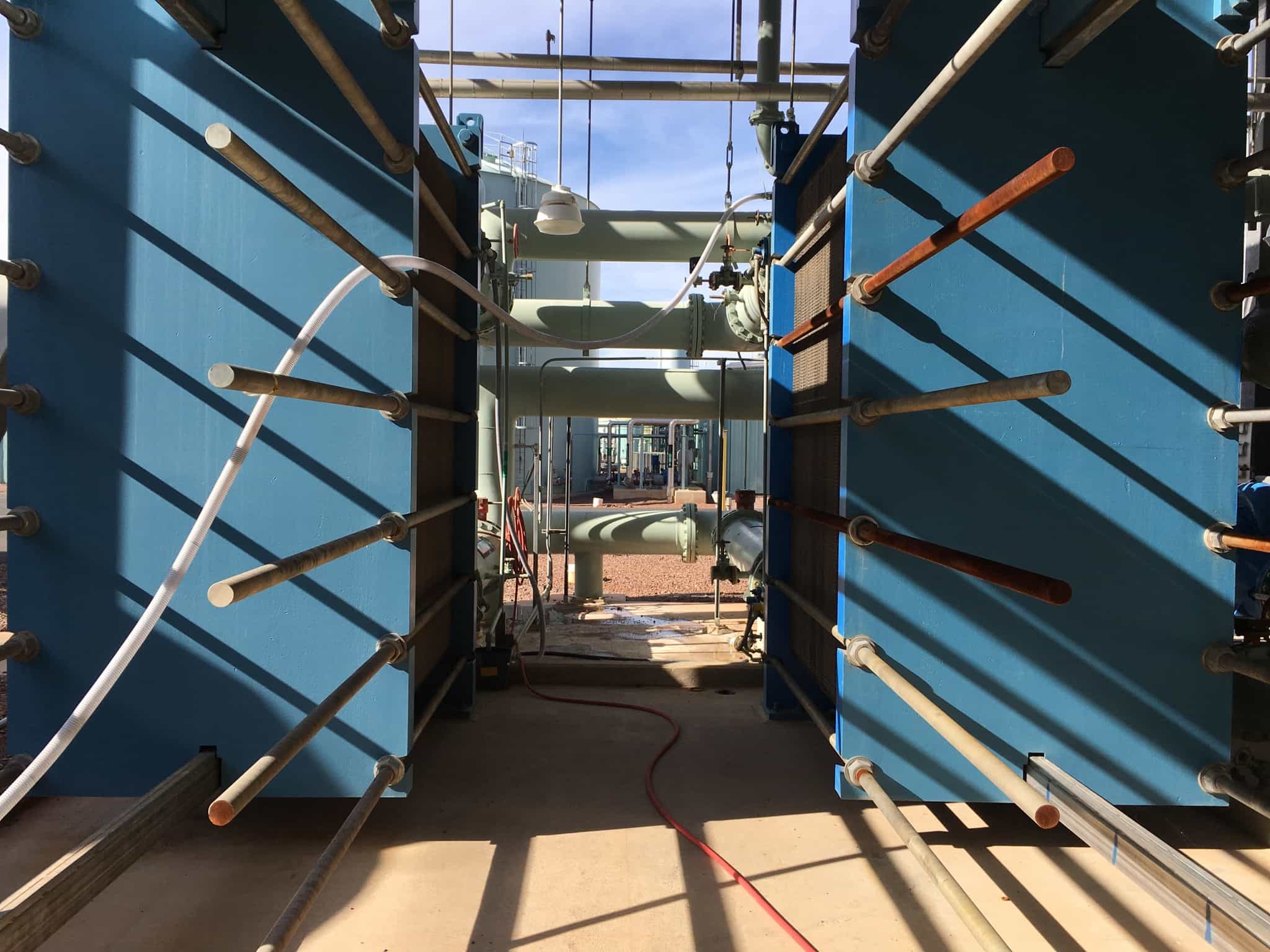
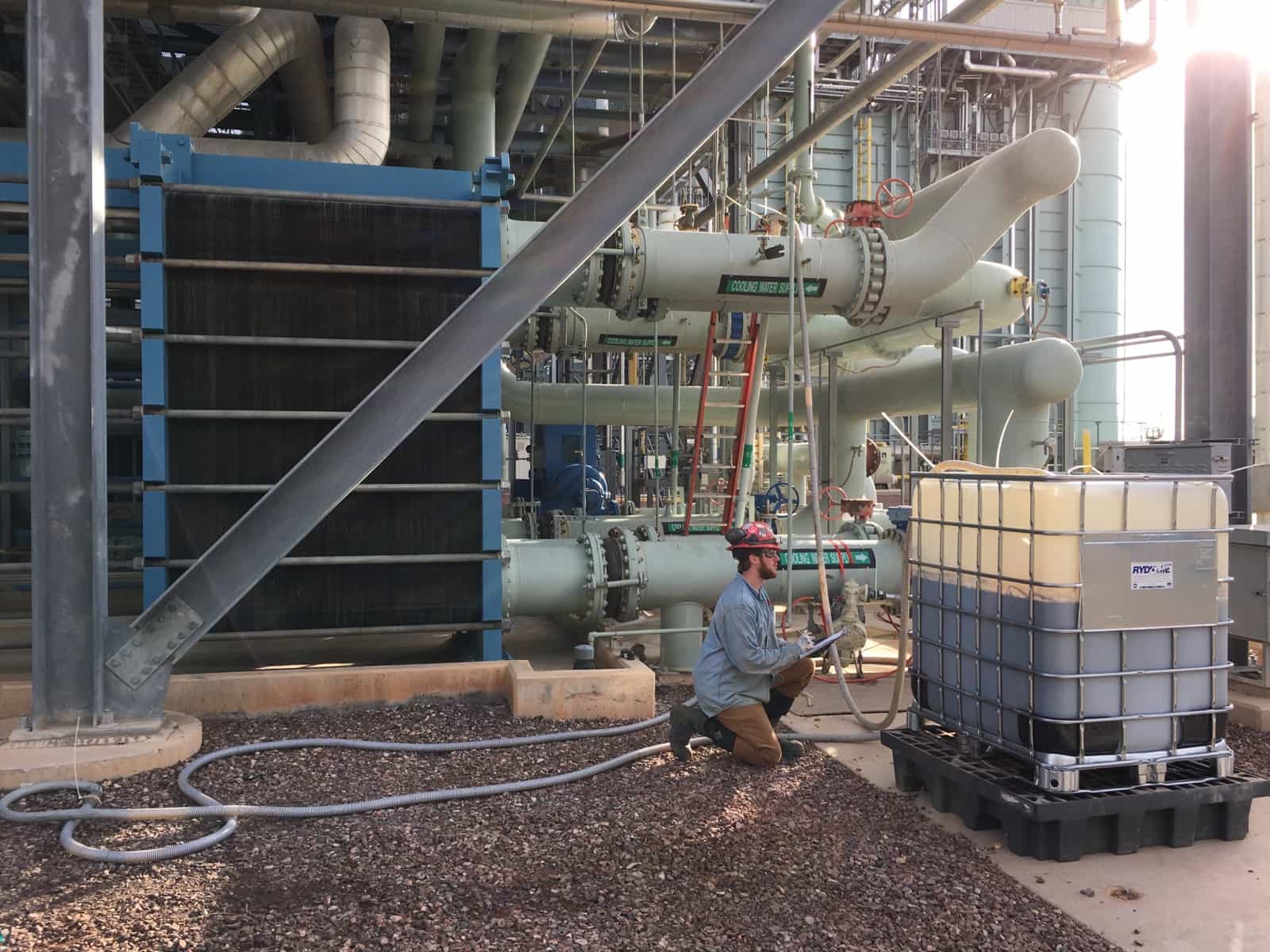
Plate and Frame Heat Exchanger Cleaning with Chemicals
Chemical cleaning involves circulating a specialized descaler through the cooling water side of the plate and frame exchanger. The descaler is typically an acid that would be matched to the deposit composition prior to the job. The acid is inhibited, which means that it will dissolve the deposit on the metal, but it will not damage the actual metal. These descalers are safe for all common types of material including titanium, copper-nickel, stainless steel, etc.
The process works by connecting a pump to the bottom port of the plate and frame heat exchanger. The pump injects a descaler and water solution into the heat exchanger. The exit point is the top port of the exchanger. Once the solution is in the exchanger, it is typically circulated for about 8 hours. While the solution is circulating, it dissolves the debris between the plates of the exchanger. The last step of the process is a water flush and then the unit will be clean enough to return to service.
The main benefit of chemically cleaning plate and frame heat exchangers is that disassembly of the unit is not necessary. Thus this method is easy to service and requires less labor, less time, and no need to replace gaskets. Ultimately, all this adds up to an efficient cleaning method for a lower cost.
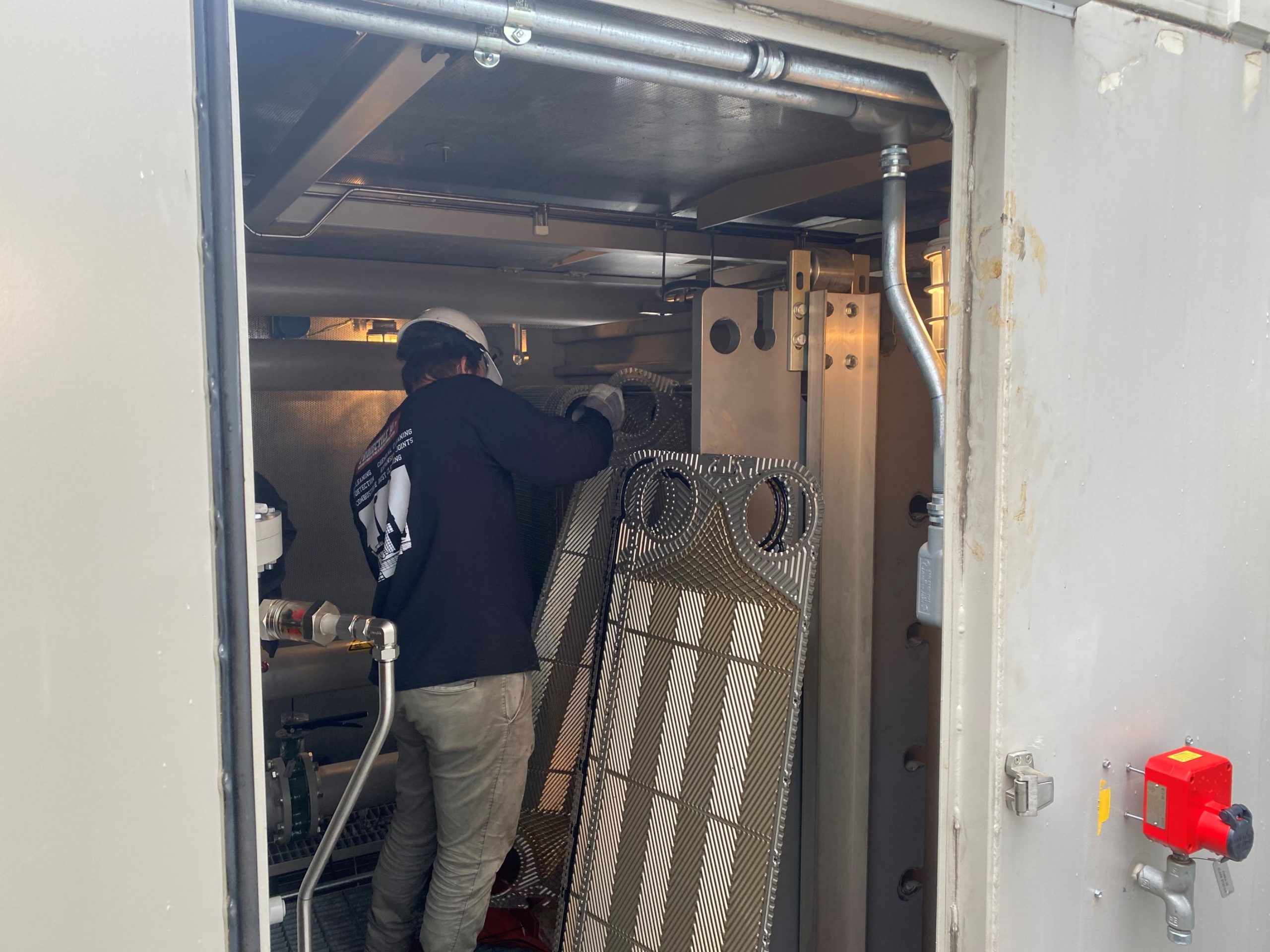
When we clean a PHE manually, the first step is to dismantle the heat exchanger according to the manufacturer’s instructions. Each piece is carefully disassembled and moved to a central location with ample space for a thorough cleaning.
Next, we manually apply a cleaning agent to each plate to remove any debris that may have accumulated during the operation of the heat exchanger. This is followed by a deep rinse of the agent with a combination of soft bristle brushes and a high-pressure washer. After the plates are completely rinsed, we reassemble the exchanger and put it back into service.
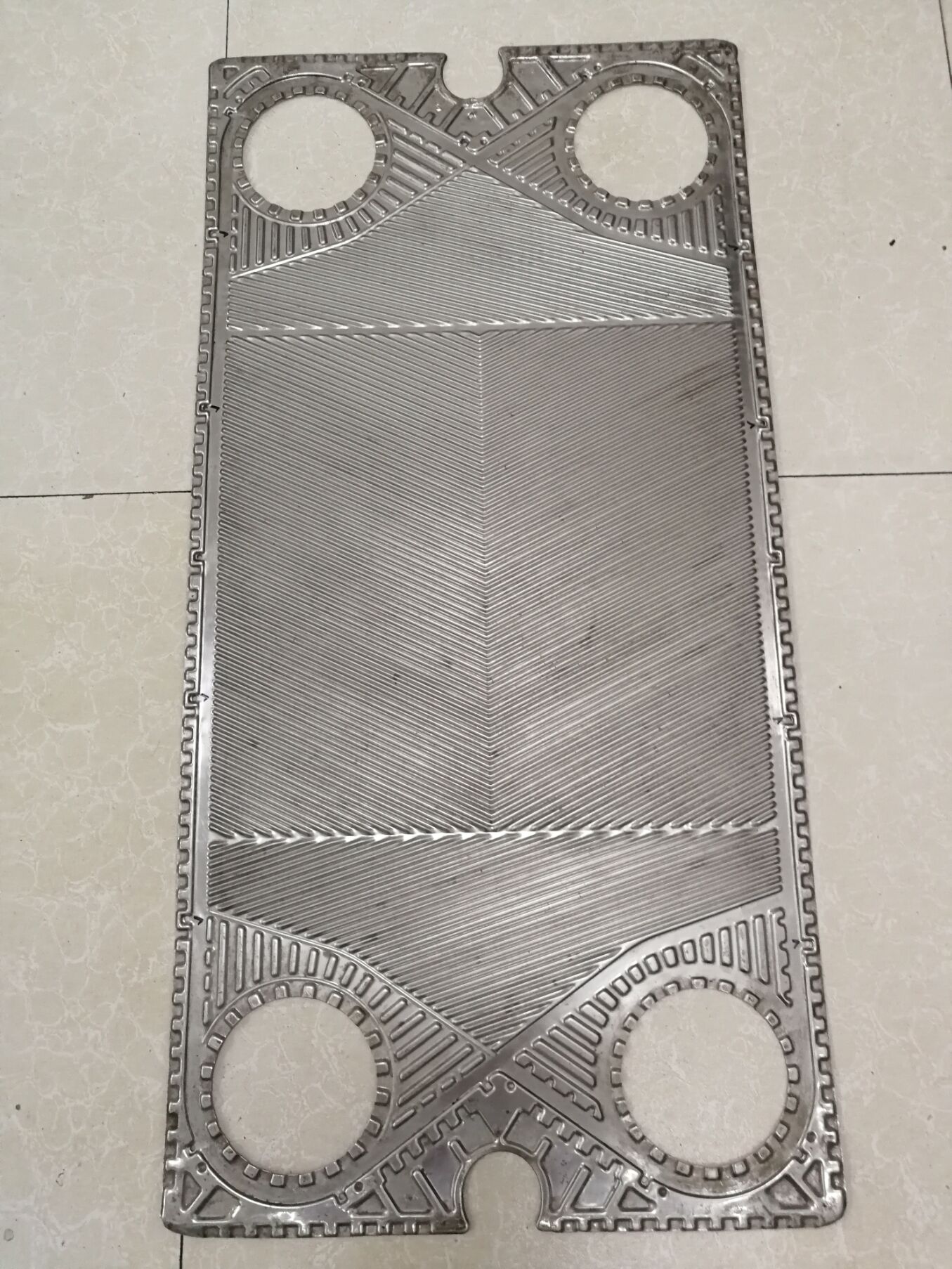
Manual cleaning is the preferred method of plate and frame heat exchanger cleaning when the process includes maintenance or replacement of parts within the assembly. The unit is completely dismantled, stripped apart, examined for imperfections, replaced if necessary, and cleaned. Manual cleaning tends to provide longer working efficiency as opposed to the onsite maintenance as gaskets, plates, nozzles, frames and other parts can be maintained.
Projectile Tube Cleaning recently completed a chemical circulation on four plate and frame exchangers at a power station in the South West of the United States. The Maintenance Supervisor had this to say about the units’ performance:
Now that we’re consistently running and our ambient temps are getting up there, I did a quick trend to compare this time last year with the last few days this year on our heat exchangers and I see a significant Delta T increase this year compared to last. 2 degree F to be exact and that seems to be pretty consistent across both power blocks. A 2-degree increase in heat removal is huge, especially in this part of the country where it gets a tad warm.”
With results like this, it is easy to see the effectiveness of this method.
The ideal maintenance program for any plant is to stock spare plate packs and send the spares to our facility for cleaning. At Projectile’s facility, more in depth plate and frame heat exchanger cleaning services are available. The plates can be dipped in a chemical solution for a deeper cleaning process than high pressure water. Penetrant dye leak testing can also be done in order to locate potentially harmful cross plate leakages. To perform this test, technicians will use dye penetrant on one side of each individual plate. Any leaks will show up on the reverse side as dye penetrant coming through a leak or crack. After cleaning and leak testing is complete, the plates will be regasketted and sent back to the facility for use in the next cycle. This process is the most effective way to service plate and frame exchangers because it minimizes downtime through a quick plate pack swap, maximizes cleaning effectiveness through chemical bathing, and ensures reliability through leak testing with each cleaning iteration.
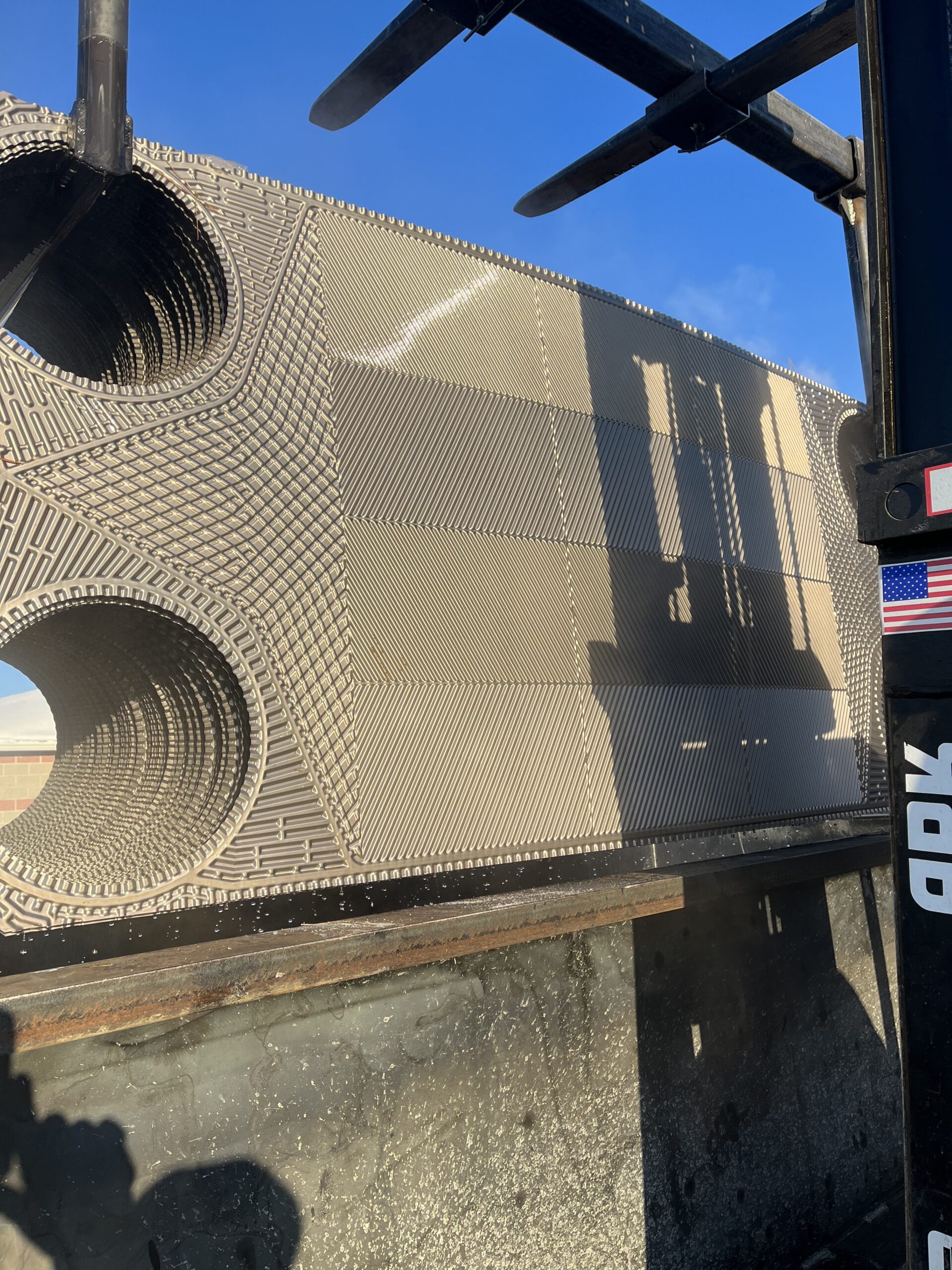
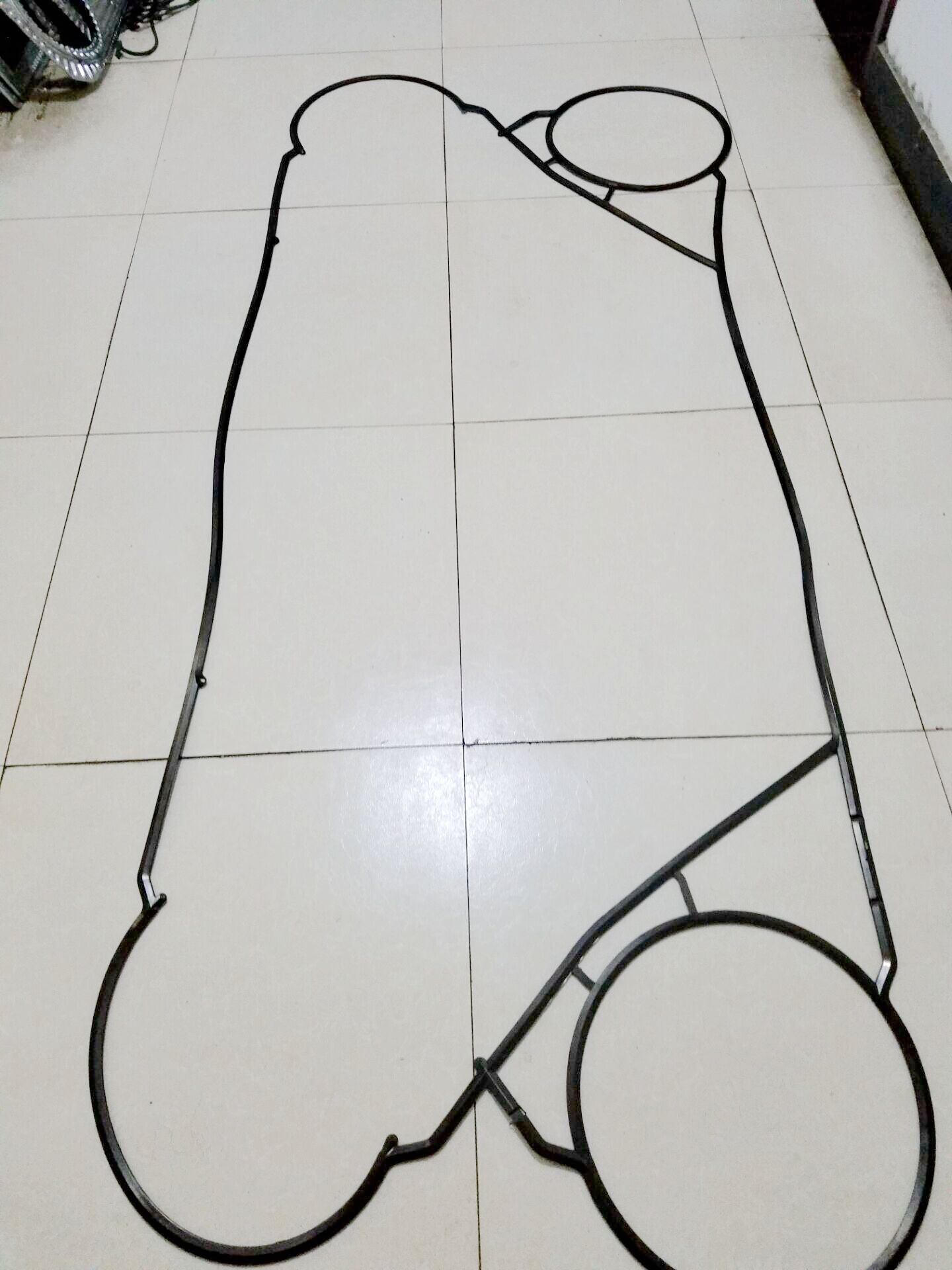
Projectile can supply any replacement spare parts for plate and frame heat exchangers, including gaskets, plate packs, and any other miscellaneous components. We carry a large stock of manufacturers and can provide everything a customer needs to maintain their plate and frame heat exchangers.
Which Plate and Frame Heat Exchanger Cleaning Option Is The Best?
No matter which way we clean your plate and frame heat exchanger, we can provide gaskets, plates, and any other replacement parts needed. If you get in touch with us today, we can help you choose the method of cleaning that works best for your types of heat exchanger and circumstances. Every installation is unique.