
Condenser and heat exchanger tube leaks can lead to costly problems such as excess backpressure, dissolved oxygen, and corrosion. Ultimately, the problems associated with tube leaks impact system efficiency and the power plant’s overall bottom line. Projectile has an array of condenser leak test procedures to find leaks quickly and efficiently while the unit is in operation or while it is offline. In conjunction with our tube leak detection services, we also offer tube plugging services in order to fix the leaks.
Industrial Leak Testing with Helium
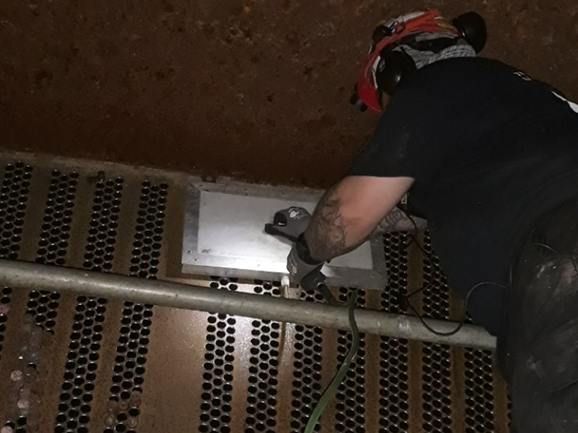
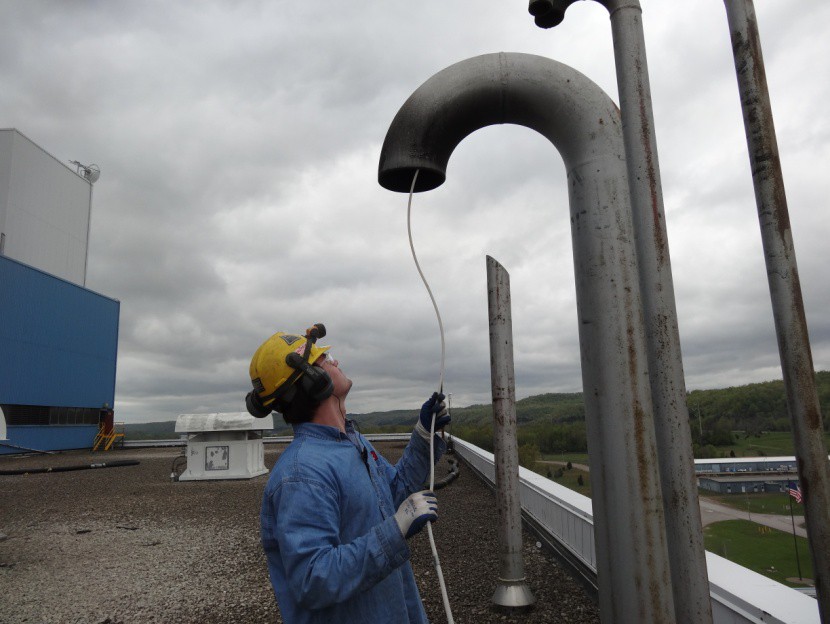
Projectile offers the precision technology of mass spectrometry to detect leaks. Projectile personnel are capable of locating small leaks as little as 2×10⁻⁹ atm cc/sec helium. The process works by covering sections tubes with plenums, which directs the helium into the tubes. If there is a leak within a section, the technician uses smaller and smaller plenums until the exact tube is identified and then marked.
Like our tube cleaning services, our helium leak detection personnel can be ready at a moment’s notice and are available 24 hours a day 7 days a week.
Condenser Air In-Leakage Testing
Air in-leakage on steam generation units leads directly to increased back pressure. Ultimately, this air in-leakage can substantially decrease the overall megawatt production capacity for the unit and thus lead to a less profitable operation. In severe cases, significant air in-leakage can cause damage in the form of pitting on the turbine blades, which can lead to increased maintenance costs.
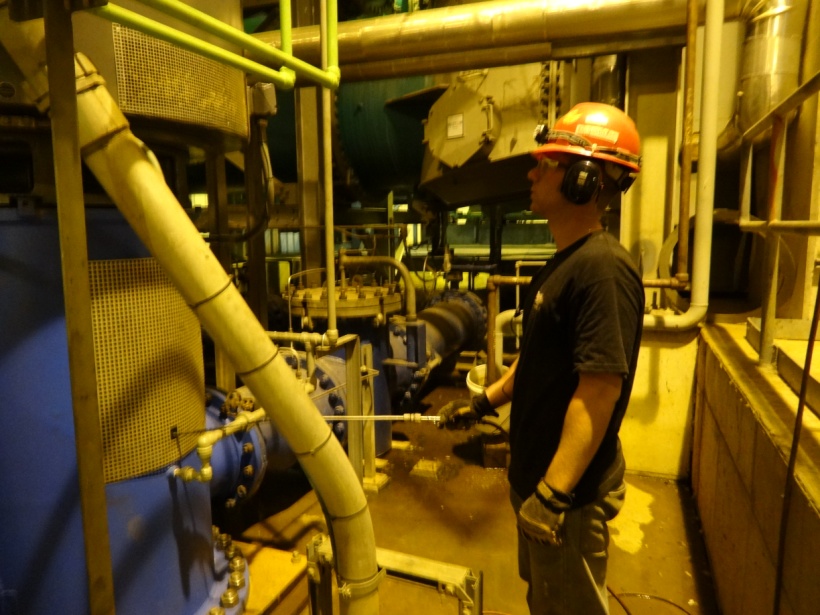
Putting a stop to air in-leakage is critical to efficiently operate a steam generation power plant, and the first step of this process is identifying the sources of air in-leakage. One of the most effective ways to find leaks is to use helium leak detection methods. This service involves testing various pieces of power plant equipment that are drawing a vacuum. The mass spectrometry leak detector is hooked up to the system’s exhaust, and helium is sprayed around the relevant equipment. Any sources of leakage will be sprayed with helium; this helium will travel into the steam space and out through the exhaust. When the helium exits the steam space through the exhaust, it is measured by the mass spectrometer, and the leak is pinpointed by technicians. Leaks are then tagged and listed based on the size of the leak. Our technicians generally begin at the turbine deck level and work their way down to the basement. Constant communication between the technician monitoring the machine and the helium wand operator ensures that the exact location of each leak is determined.
Electrical Generator Pressure Testing
Electrical generator testing is carried out using the sniffing method of mass spectrometry leak detection. The generator is pressurized with helium, and then technicians “sniff” around common areas of leakage. This piece of equipment does not need to be operational in order to carry out testing. Pressure testing with helium leak detectors can be used on a multitude of different equipment. Projectile Tube Cleaning has also performed helium pressure tests on fuel tanks, pressure vessels, and air compressor systems. This page on our website discusses how helium leak detection can be done on any equipment that can be pressurized, like an air compressor system: Leak Detection on Pressurized Equipment.
Foam Industrial Leak Testing
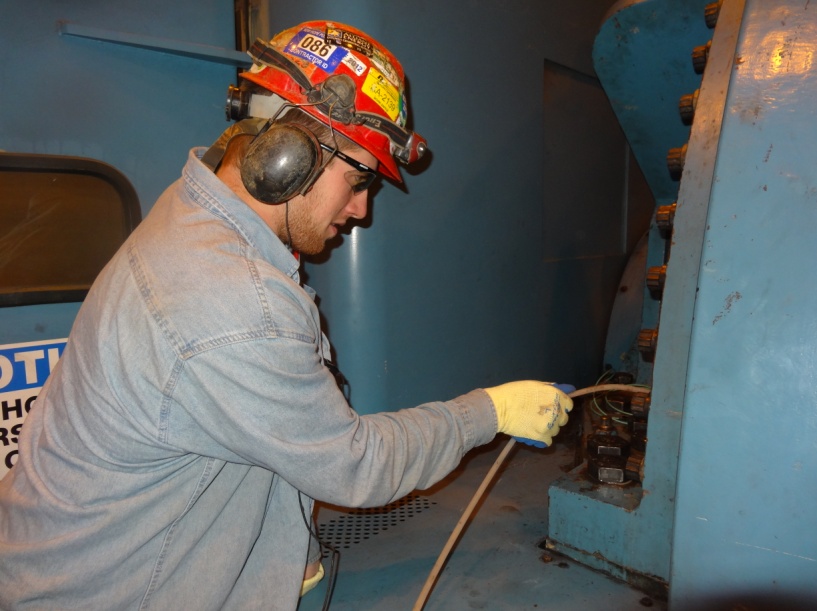
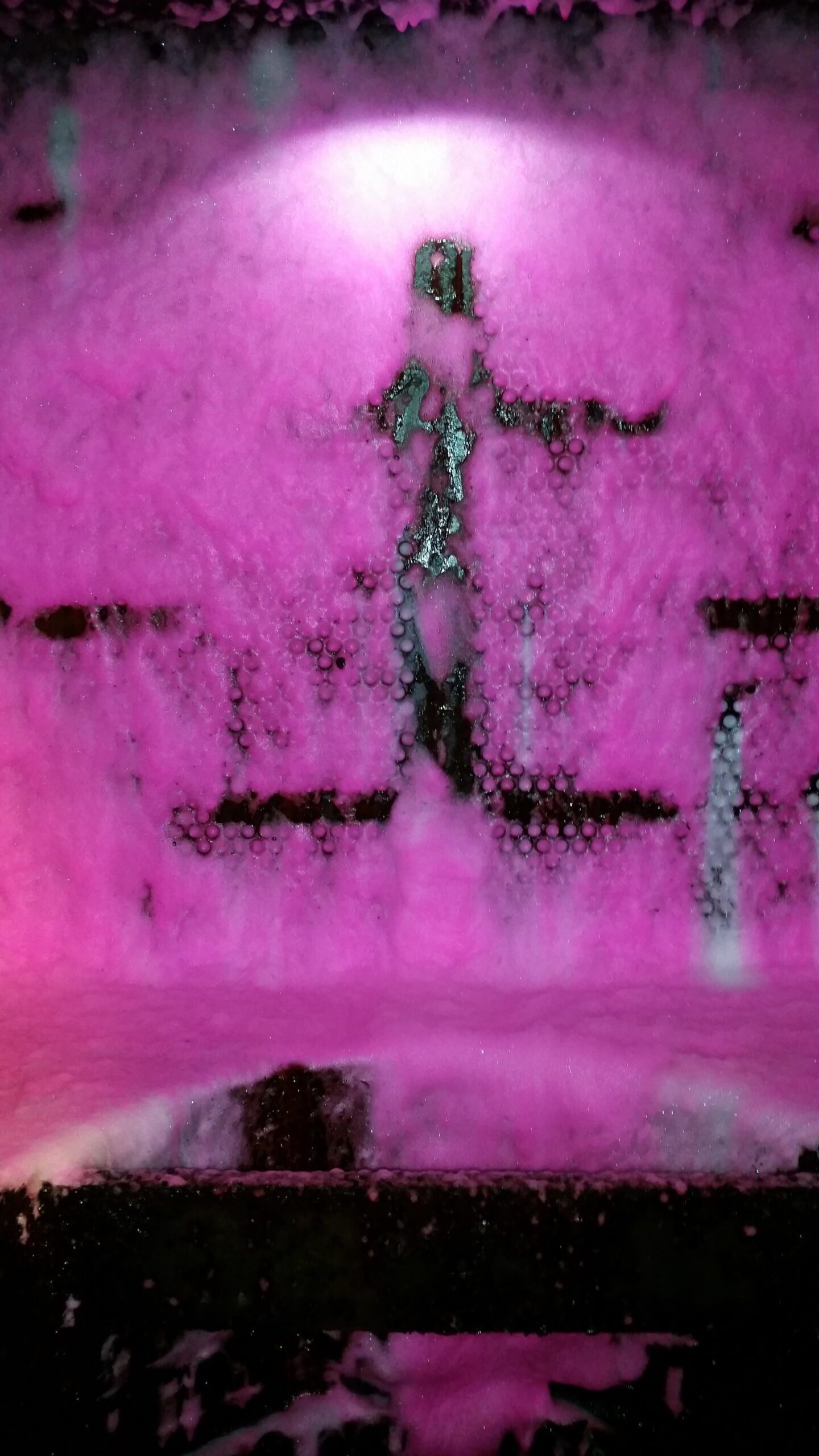
The foam tube testing method uses foaming liquid and a spraying device to coat both sides of a condenser or heat exchanger tube sheet. The foam is spread across the face of the tube sheet to cover each tube. Leaking tubes are identified when the foam is sucked from the tube sheet and down the length of the tube. This method is best for finding large leaks quickly. It is the fastest available method when the condenser system is online. Another benefit to this method is that technicians can more easily discern between tube sheet leaks and tube leaks whereas with other systems such as mass spectrometry it can be difficult. One draw back to this method is that it cannot find the extremely small leaks that mass spectrometry is able to find, but if you have big tube leaks and you are in a hurry this is the method to choose.
Pressure Testing
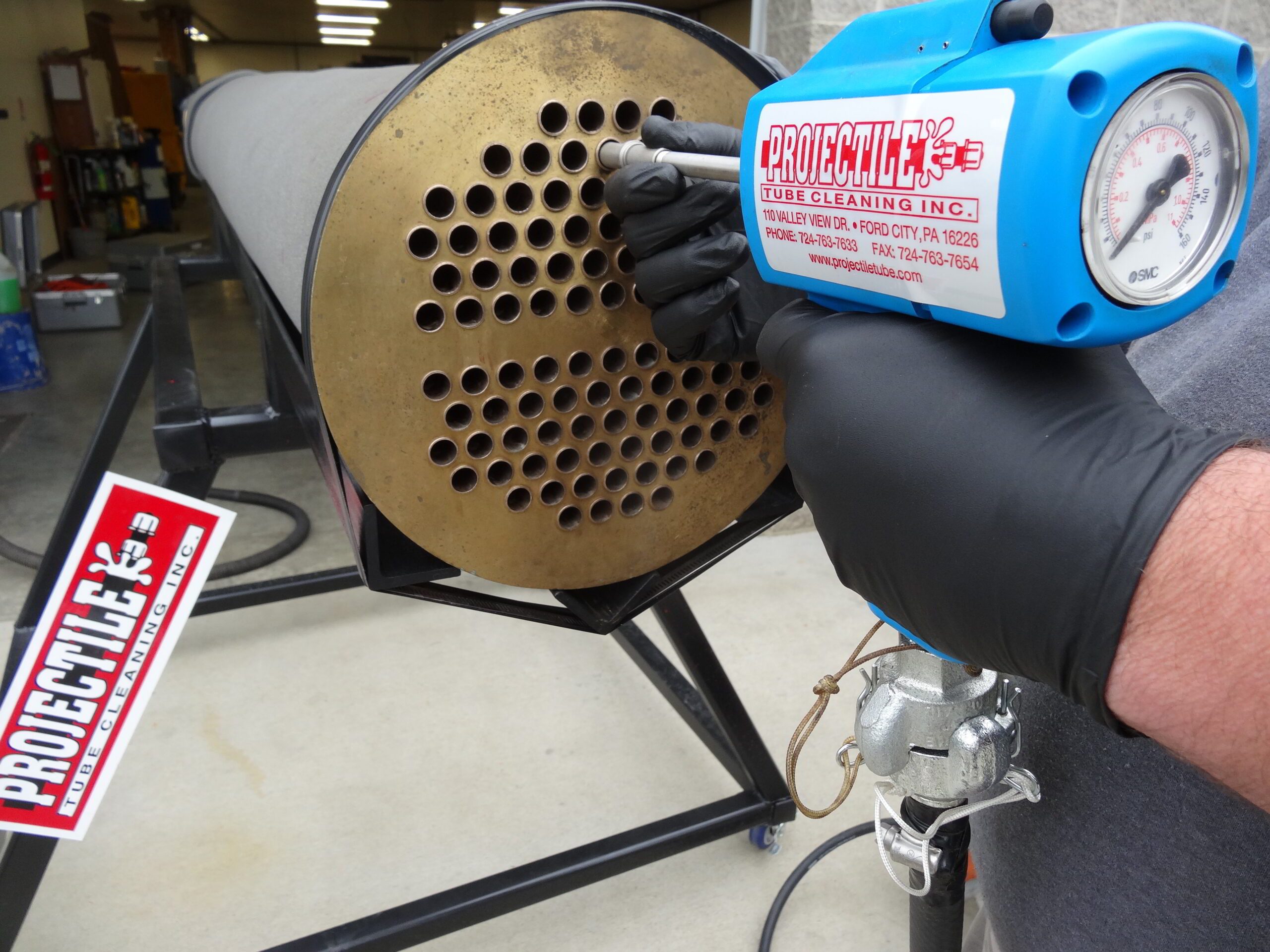
Tube pressure testing is done with two operators using special air guns. The guns are inserted at each end of a tube, and the triggers are pulled. Pulling the trigger creates a seal between the gun’s nozzle and the tube, as well as allows air to flow into the tube. The tube fills with air, and a gauge is monitored to observe the pressure. If the pressure remains constant after releasing the trigger, the tube is not leaking. But if the pressure decreases after releasing the trigger, then there is a leak in the tube.
Tube Plugging for Industrial Leak Detection
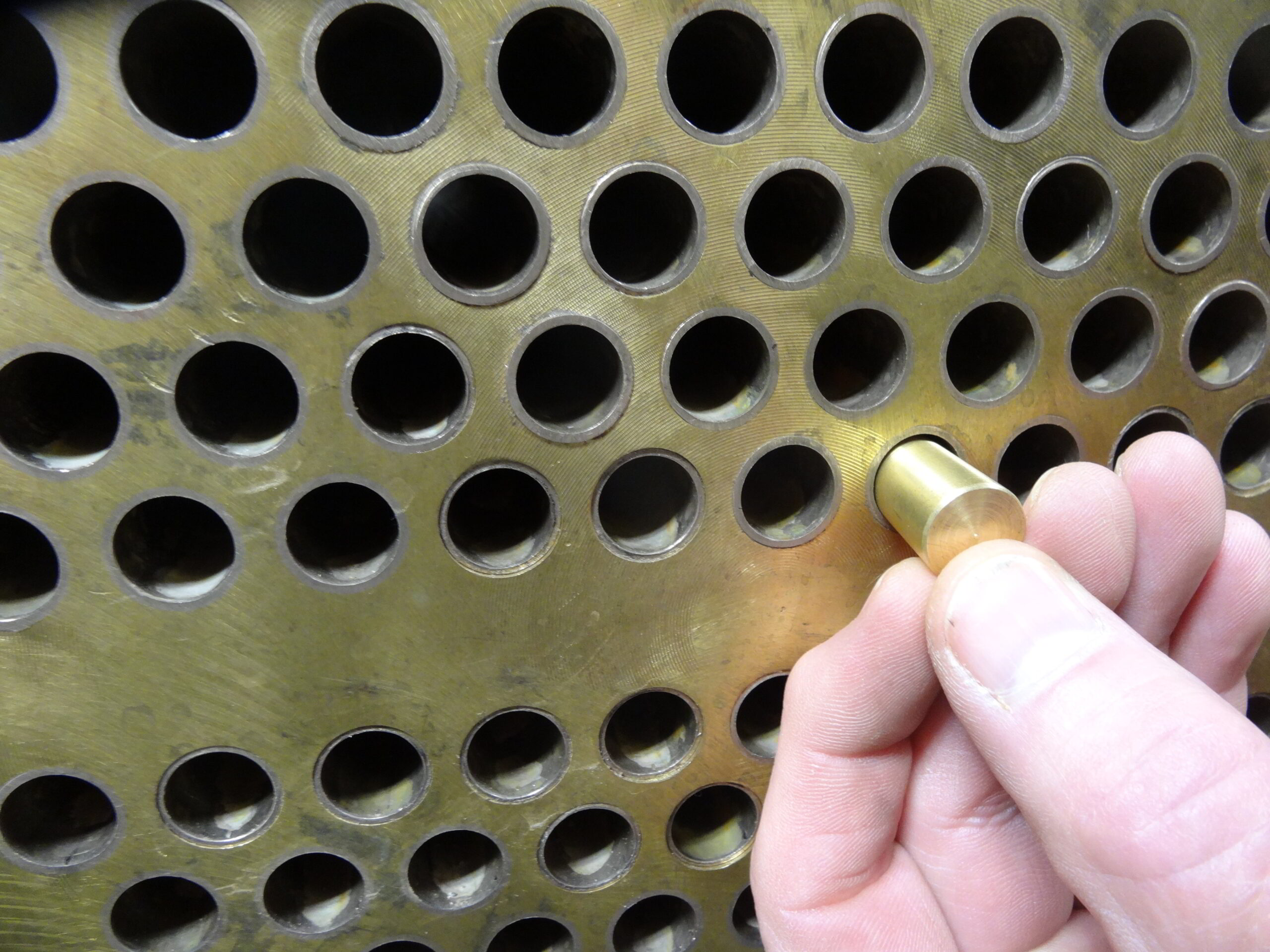
After locating the leaks, Projectile personnel can also plug these leaks. We offer numerous types of plug designs depending on the types of tubes or the customer preference (Tube Plugs). Because we manufacture the plugs, we can offer customers special discounts on our plugging services that other providers cannot.
Preventing industrial leaks and other issues with your heat exchangers and condensers is one of the many reasons to keep your tubes clean and as free of blockage as possible. Leaking tubes and problems of all kinds can be mitigated by consistent and regular tube cleaning.
Benefits of Projectile’s Industrial Leak Detection Services
- Pinpoints potential sources for common problems such as high back pressure and high levels of dissolved oxygen
- In most cases, Projectile Tube Cleaning personnel can be onsite within a 24 hour period
- Projectile’s leak detection services can be coupled with our tube plugging and expansion joint repair services in order to directly address costly leaks